Earlier this year, Colette Harvey let us into one of the most personal chapters of her life, a breast cancer diagnosis that arrived just before Christmas, at 43. A respected publicist and stylist, and one of Sigourney's oldest friends, she chose to tell her story publicly in the hope it might help even one woman. Her first piece moved thousands of readers. If you are new to Colette, I Got Breast Cancer for Christmas is where her story begins. Here, she picks up where she left off, through surgery, chemotherapy and a quiet shift in what beauty has come to mean.
As I sat down to write my second article, I realised I had been putting it off. Not because I have not loved sharing my story or connecting with people who have reached out to share theirs. I think I was putting it off because, in some strange way, I was protecting myself. I wanted to get through chemotherapy first. I wanted to have a clearer picture - or at least as clear as one can have while still living through it - of what I wanted to say and how I truly felt.
When the big C unexpectedly came into my life, I made myself a few promises: it was going to change my life for the better. Right at the top of that list was being completely honest about this journey. The good, the bad, the funny and the really bloody hard.
When the big C came into my life, I made myself a few promises: it was going to change my life for the better.
Since my first article, a lot has happened. After my double mastectomy, we discovered that the cancer had spread to my lymph nodes. Annoyingly, that meant another surgery just three weeks later to remove them all from my right side. I honestly thought losing my breasts would be the hardest part. Shockingly, it wasn't.
What Nobody Tells You About Lymph Node Removal
Nobody really prepares you for what happens when your lymph nodes are removed. Your lymphatic system no longer moves fluid around your body the way it once did, and suddenly I found myself with what I lovingly refer to as "tuck shop arms." Yes, that is now an official medical term in our house. Along with that came cording - a tight, painful pulling sensation that ran down the entire right-hand side of my body. It made even simple movements uncomfortable.
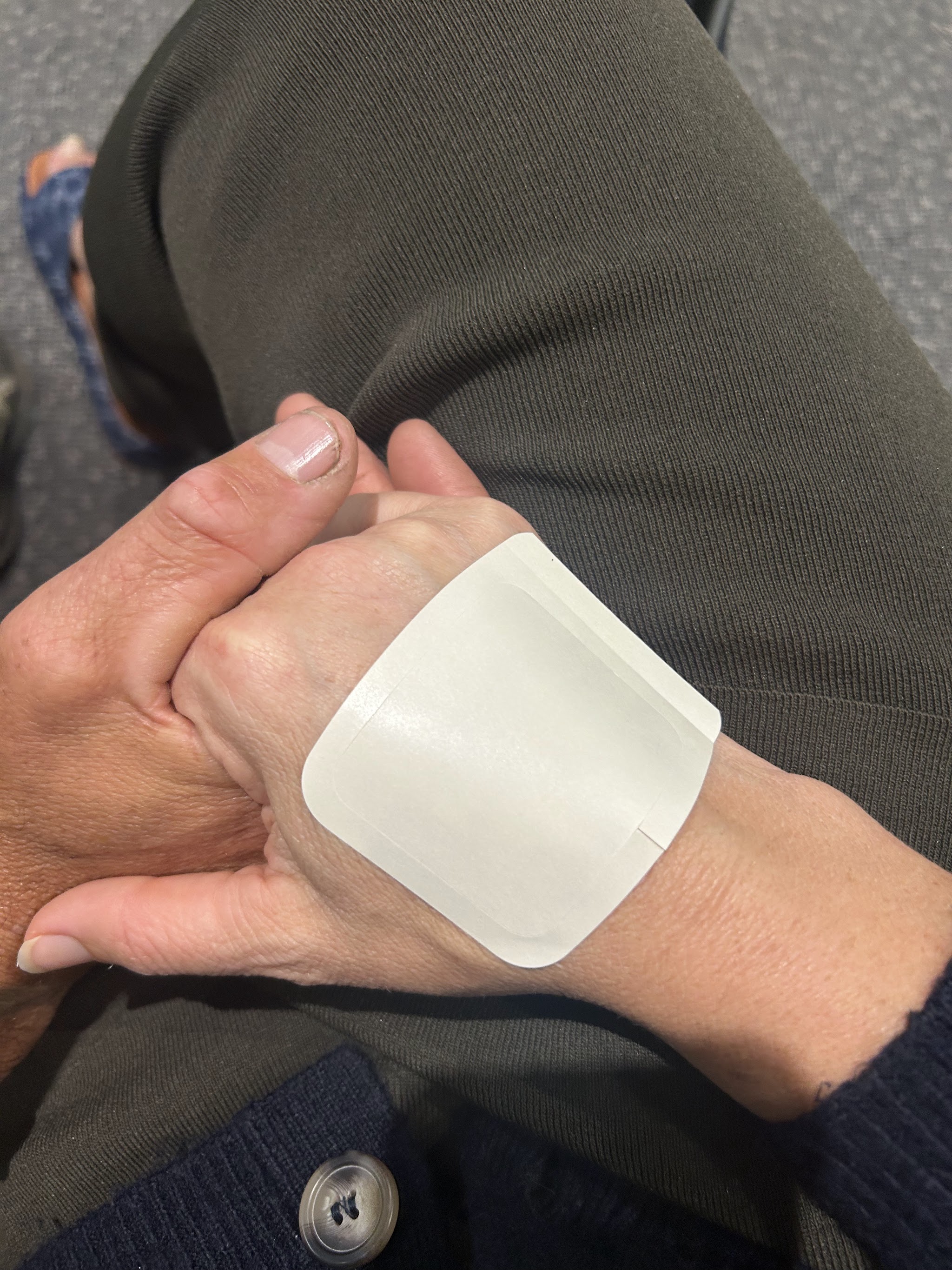
Thankfully, my incredible surgeon armed me with exercises and rehabilitation techniques, and one of the greatest wins throughout this journey has been meeting Kate Perkins on the Central Coast. Kate specialises in all aspects of cancer rehabilitation and breast cancer related lymphoedema (BCRL), using state of the art technology to deliver photobiomodulation therapy (PBMT) to minimise the side effects of cancer treatment, including reducing the development of radiation fibrosis, and minimising the development of BCRL, and speeding up recovery times. I have seen Kate twice a week since my surgery and, despite being considered high risk, I have thankfully avoided lymphoedema so far. Touch wood. Kate has become one of the many incredible people who have carried me through this journey.
Chemotherapy, Cold Capping and a Very Elite Playlist
Then came chemotherapy. I had my treatment at the SAN Hospital, where one of my oncologists is based, and you can bet your life I chose cold capping. If there was even a small chance I could keep my hair, I was taking it. I researched cold capping for weeks. I contacted the company that made the machines, watched endless YouTube videos, joined Facebook groups and did what every woman does best - fell down a very deep social media rabbit hole. One of the nurses gently warned me that they did not usually cold cap patients on my chemotherapy drugs because the treatment takes so long. Door to door, each session would be almost twelve hours. Needless to say, I built an elite playlist full of 90s rap and music that reminded me of happier times. It became my soundtrack to survival.
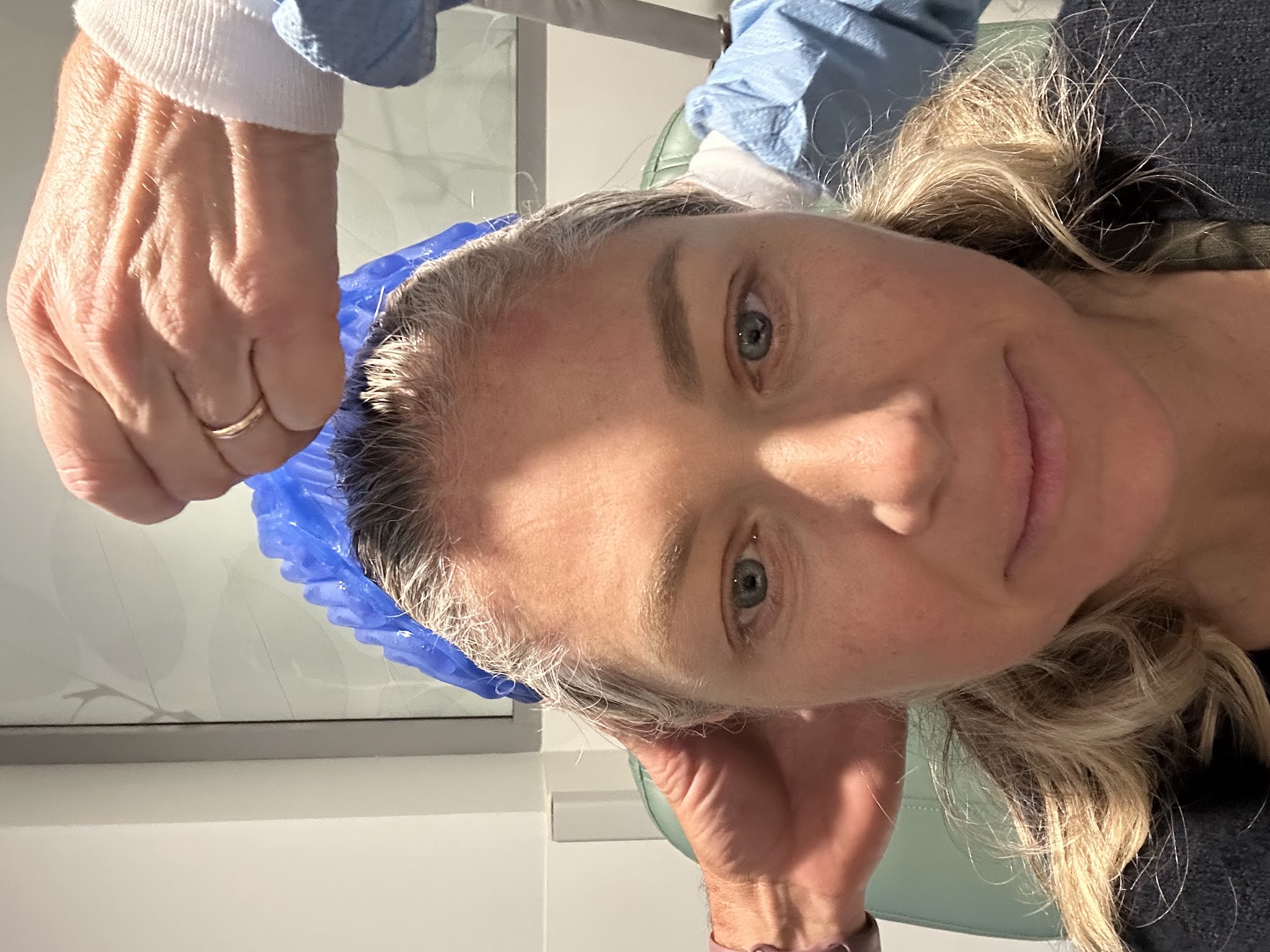
Getting fitted for the cold cap before treatment.
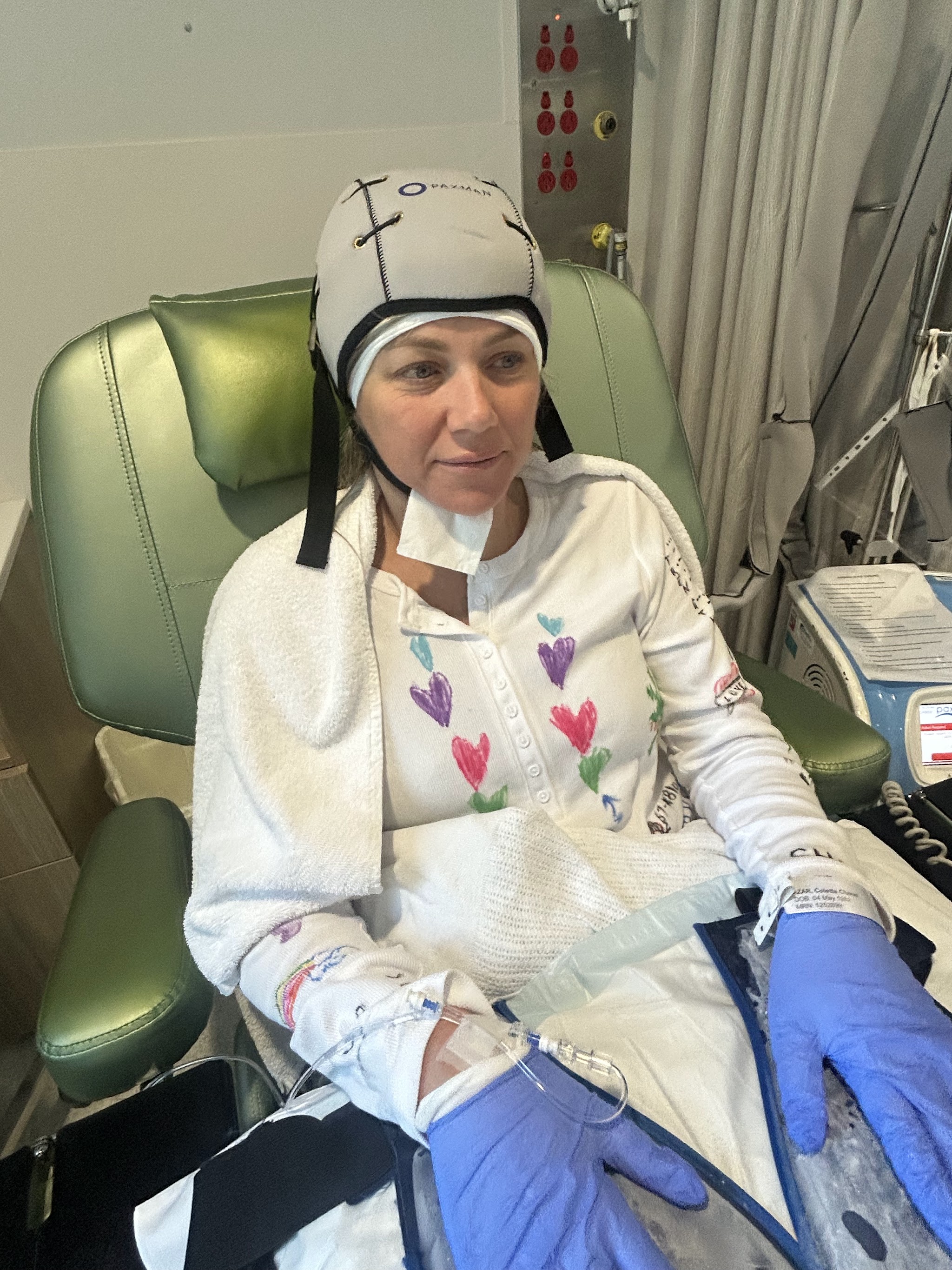
Twelve-hour sessions, a cold cap and a heart cardigan. The things you do for your hair.
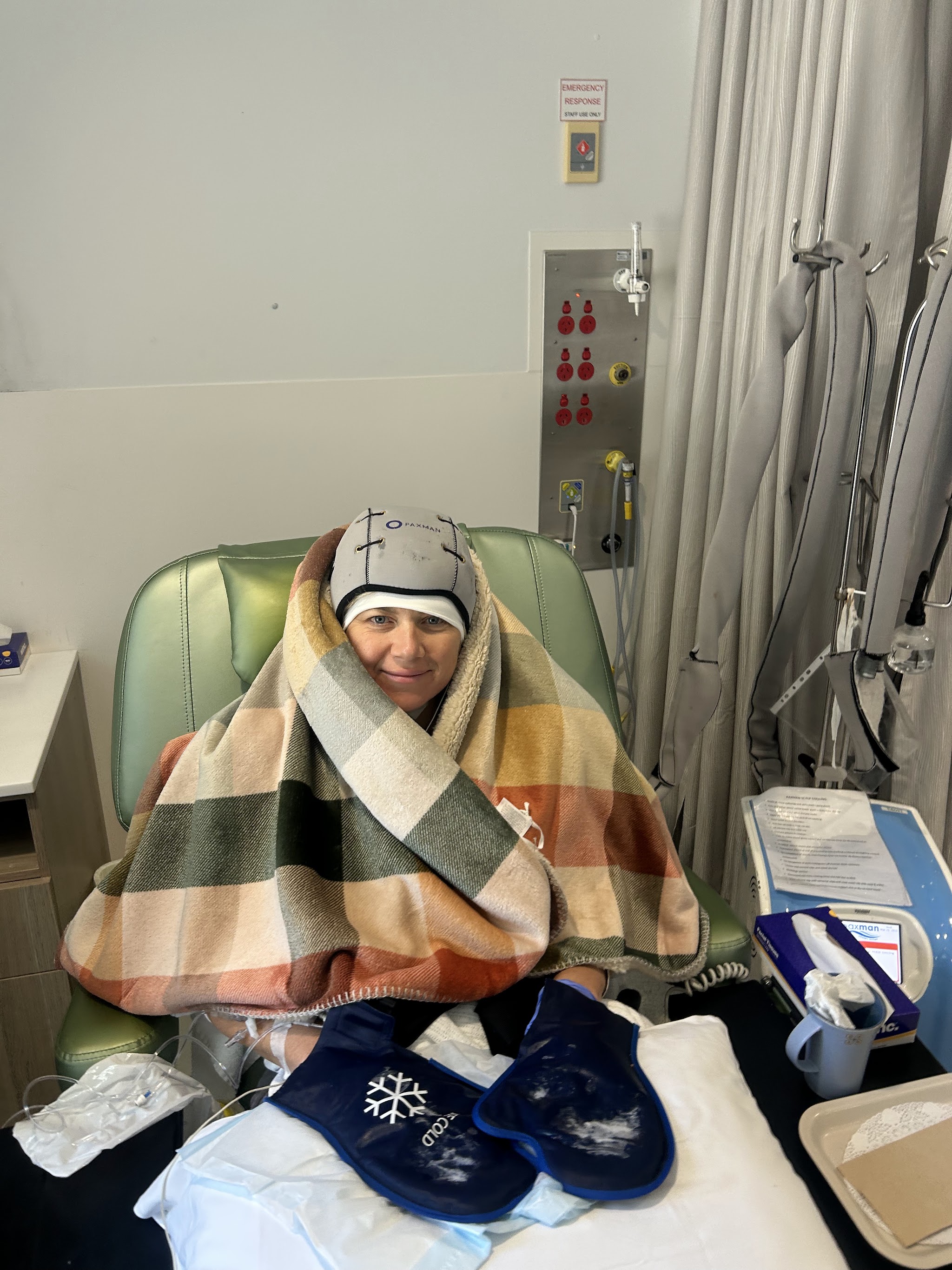
Blankets, gloves and a cold cap - the full chemo day kit.
Talking to My Hair and Embracing the Woo Woo
If you know me, you know I am incredibly headstrong. Every single day I talked to my hair. Out loud. Yes, I realise how ridiculous that sounds, but somewhere along this journey I have fully embraced my "woo woo" era and, honestly, I think it has helped. I now journal most mornings and repeat the same mantra every night before I go to sleep. It quietens the constant noise in my head that still likes to appear at 2 am and remind me of everything that could go wrong. Those moments are becoming fewer, and for that I am incredibly grateful.
I have fully embraced my woo woo era and, honestly, I think it has helped.
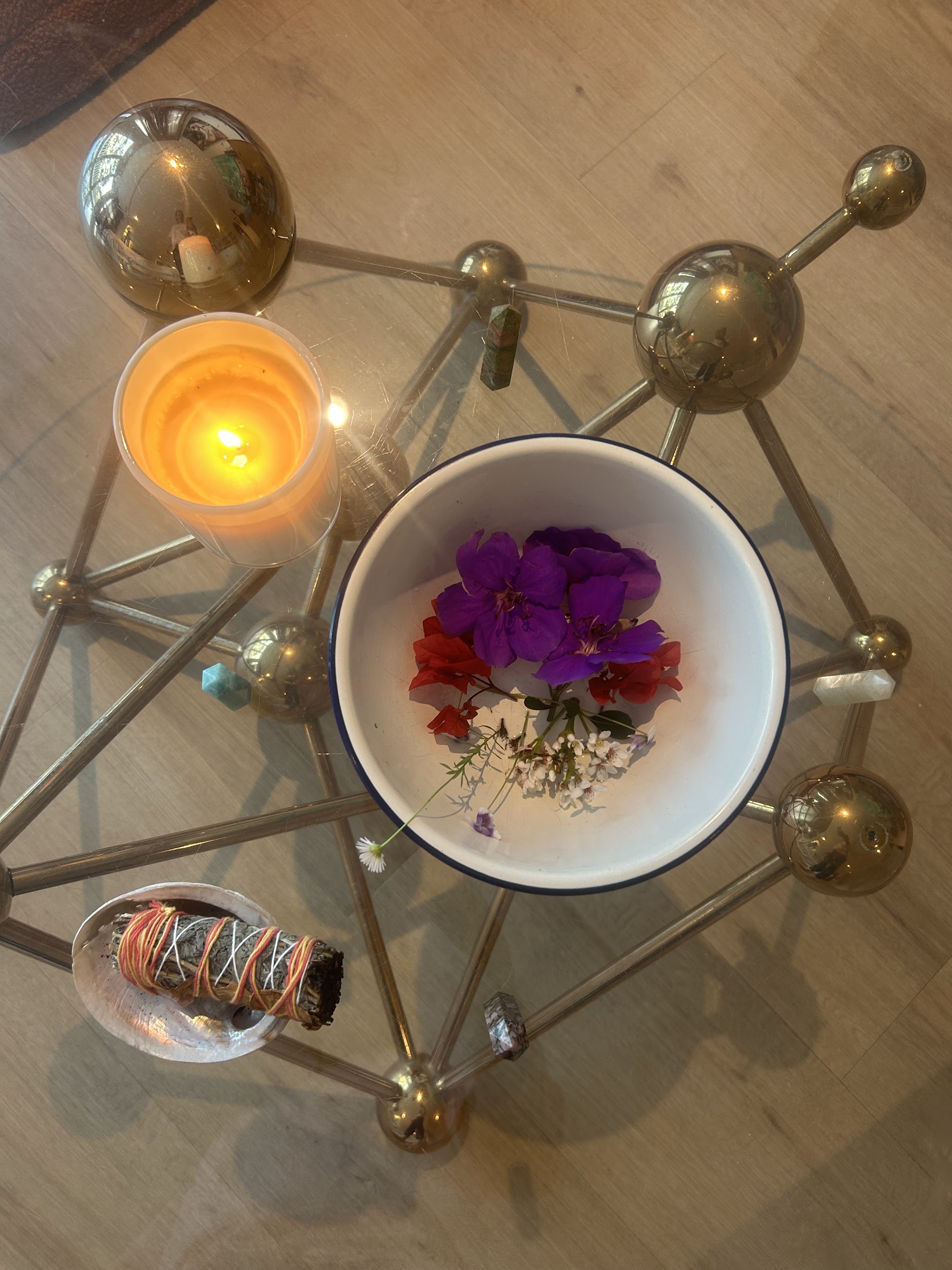
The woo woo era is real. And it helps.
Ed's note: If you're searching for ways to settle your nervous system and quiet a racing mind, our guide to breathwork is a gentle place to begin.
The Clean Beauty Overhaul
I completed four rounds of chemotherapy over three months and, although my hair came out in handfuls during the first two cycles, somehow it hung in there. Friends offered every piece of advice imaginable - special tonics, supplements, fasting and miracle products - but very early on I decided to strip everything back. Every beauty product containing unnecessary chemicals went into a large plastic tub, which I literally locked away so I would not be tempted to use them. Instead, I created the cleanest beauty routine I possibly could.
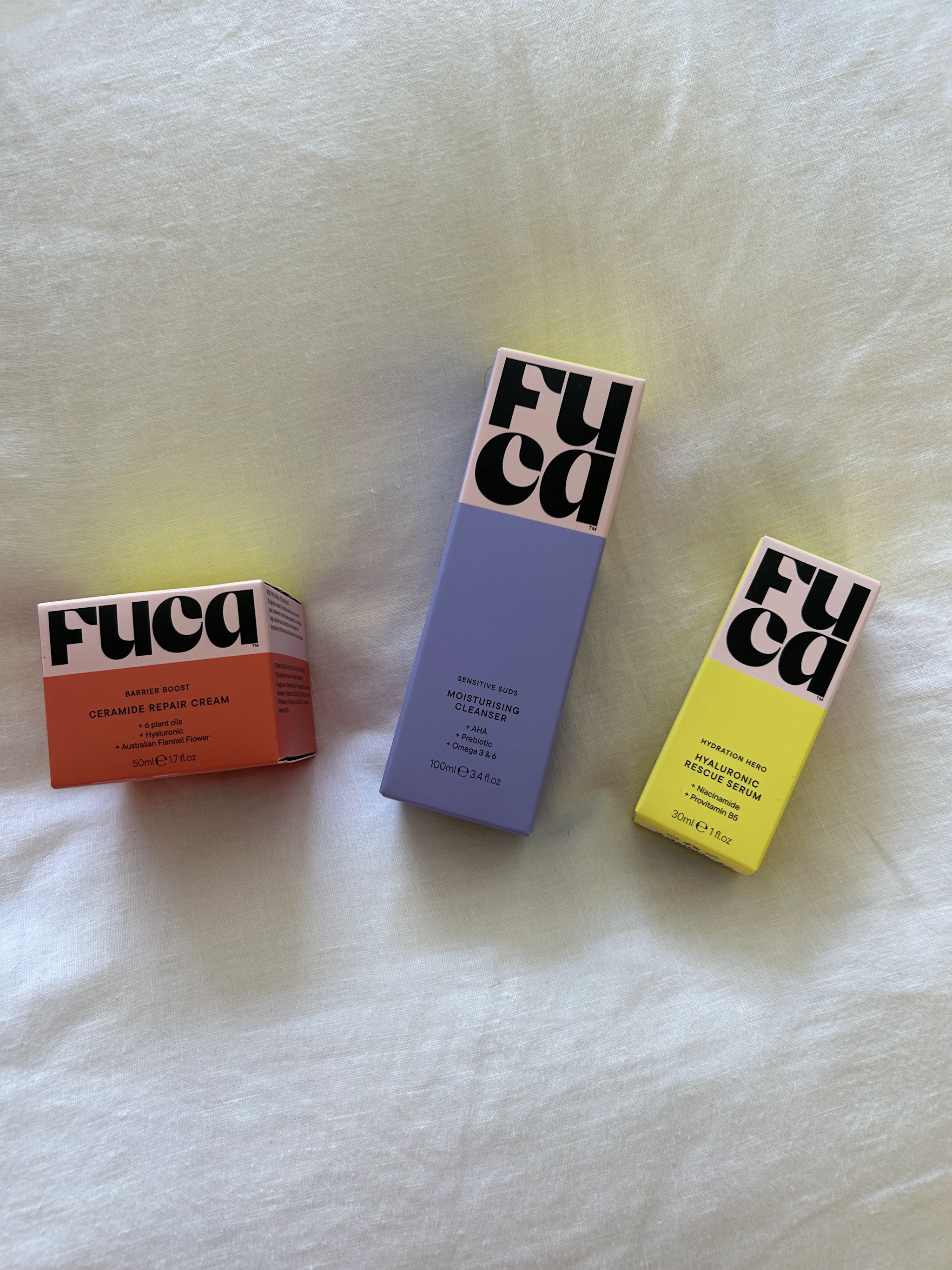
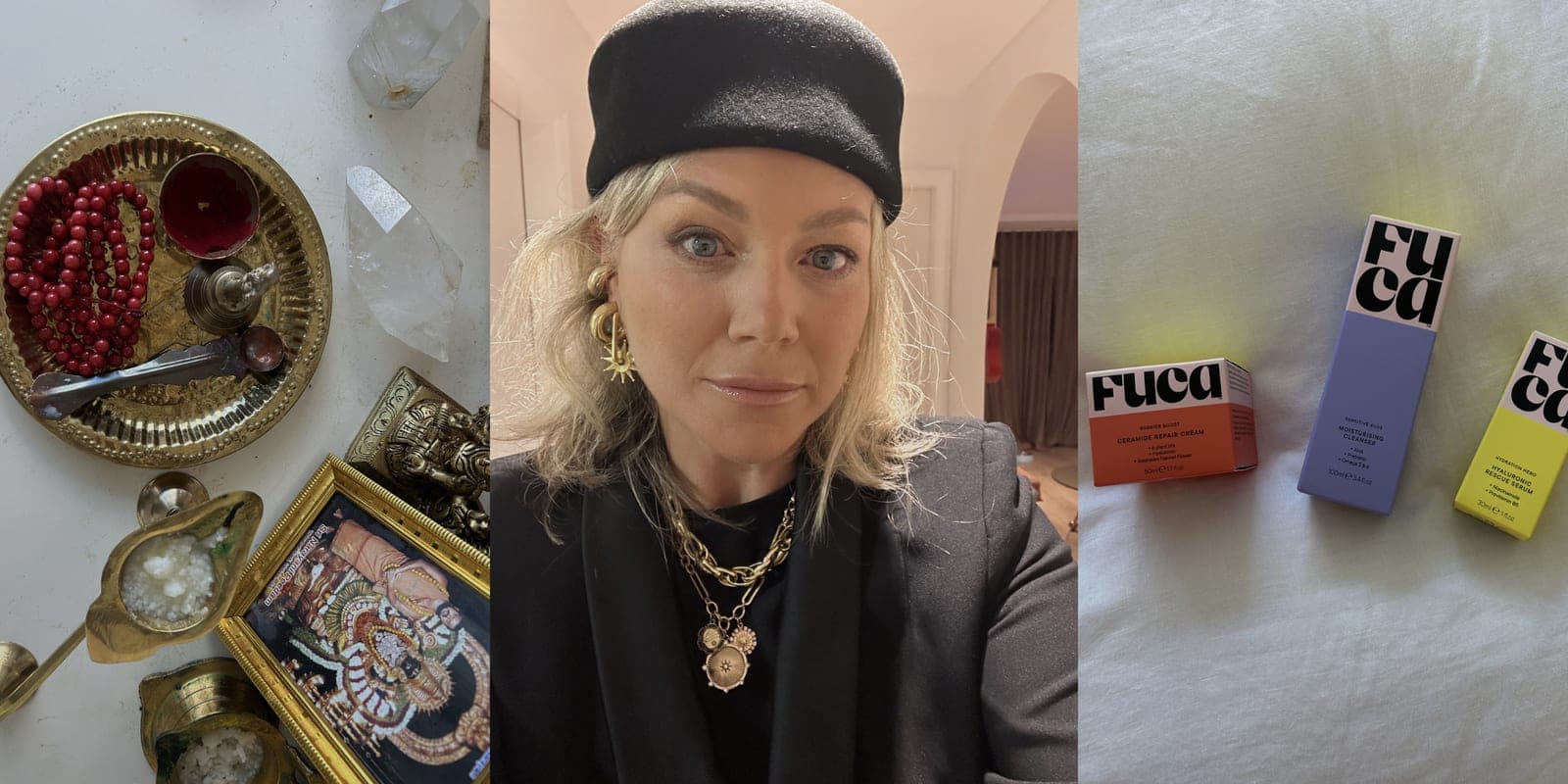
The only skincare my face would tolerate: FUCA - F U Cancer - developed by a cancer survivor.
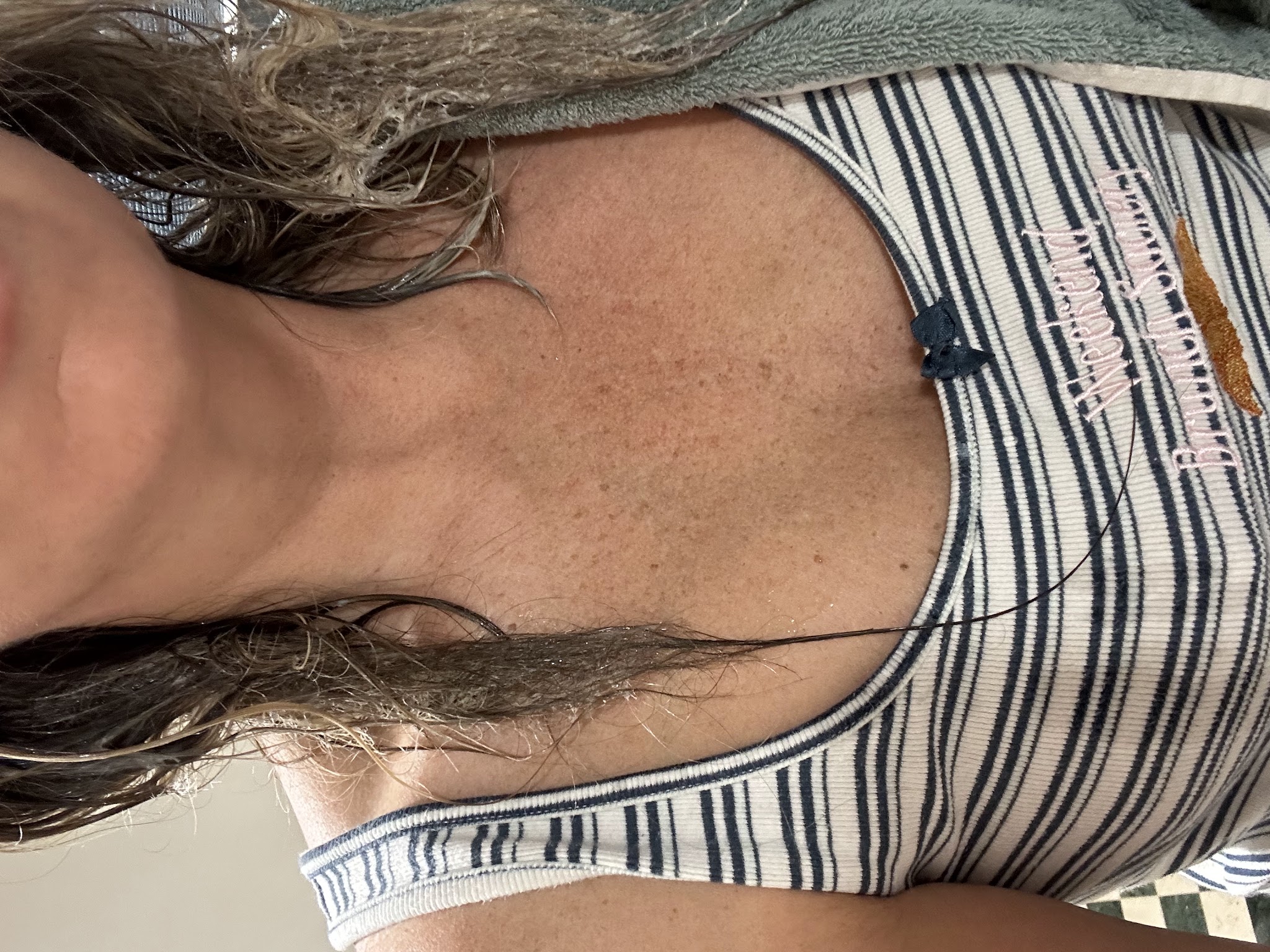
On my face I can only use FUCA, which stands for F U Cancer, developed by founder Jess after going through cancer treatment herself, or I break out in an awful rash. My hair wash day quickly became my least favourite day of the week (I don't cry very often, but this was the day I did). That was the day I would lose the most hair. I only washed it once a week using MooGoo shampoo and conditioner, never brushed it when it was wet and avoided tying it back wherever possible. The only hair ties I could tolerate were oversized silk scrunchies, and sleeping on a silk pillowcase genuinely reduced the amount of hair I lost overnight from tossing and turning.
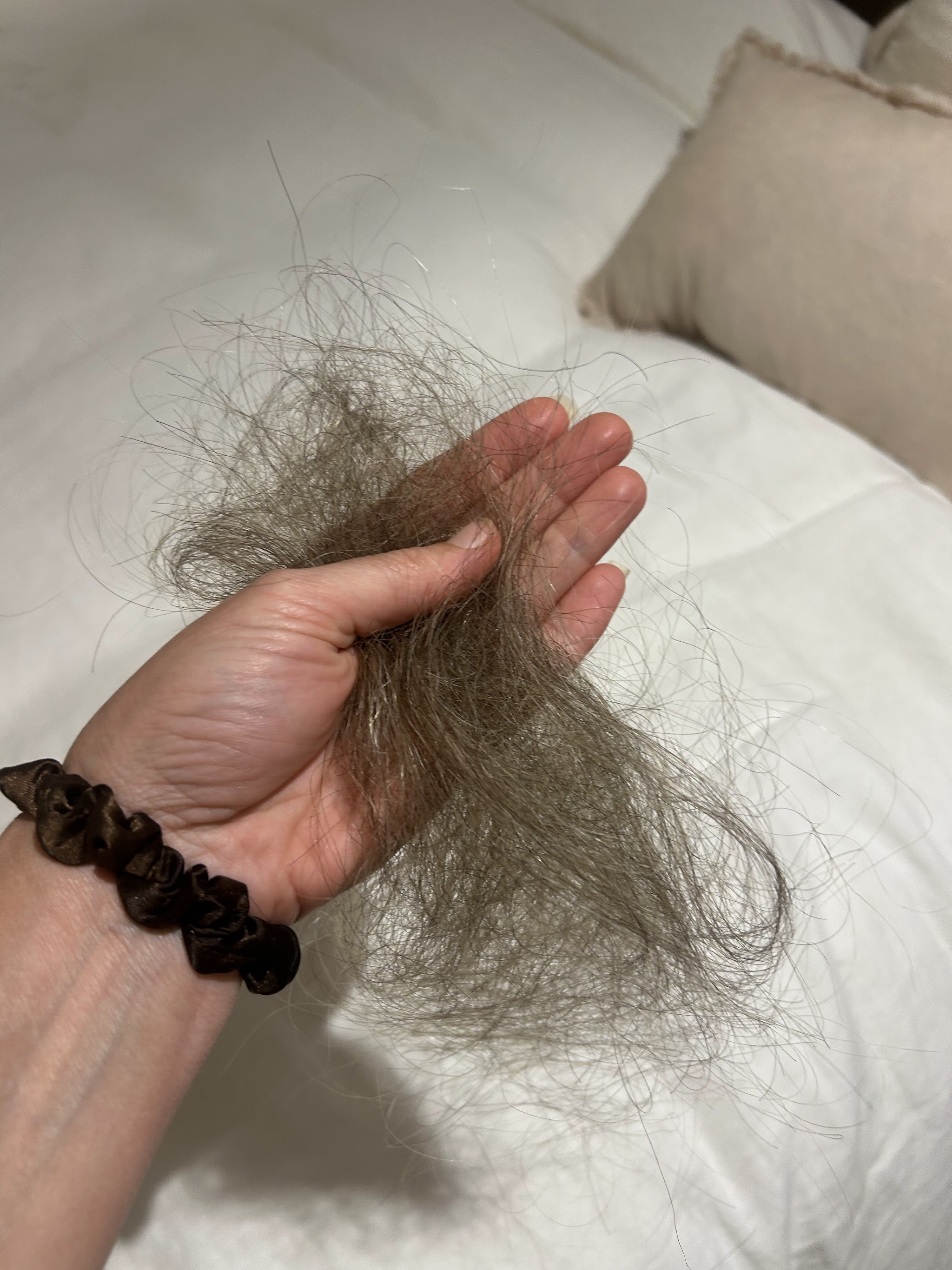
The reality of wash day. This was the day I cried.
Today, I have lost about fifty per cent of my hair. I joke with my husband that it is like one of those never-ending packets of Tim Tams. Every time I think, "Surely there cannot be any left," another handful somehow appears. There were so many moments where I considered shaving it all off. Instead, I cut it into a bob at the beginning of treatment (with my kitchen scissors), which promptly turned into what could only be described as dreadlocks thanks to the freezing temperatures of the cold cap. Later, I developed two bald patches at the top of my head, which I suspect were where the cap never quite made perfect contact with my scalp. Rather than obsessing over whether I had done something wrong, I simply became very strategic with my hairstyle.
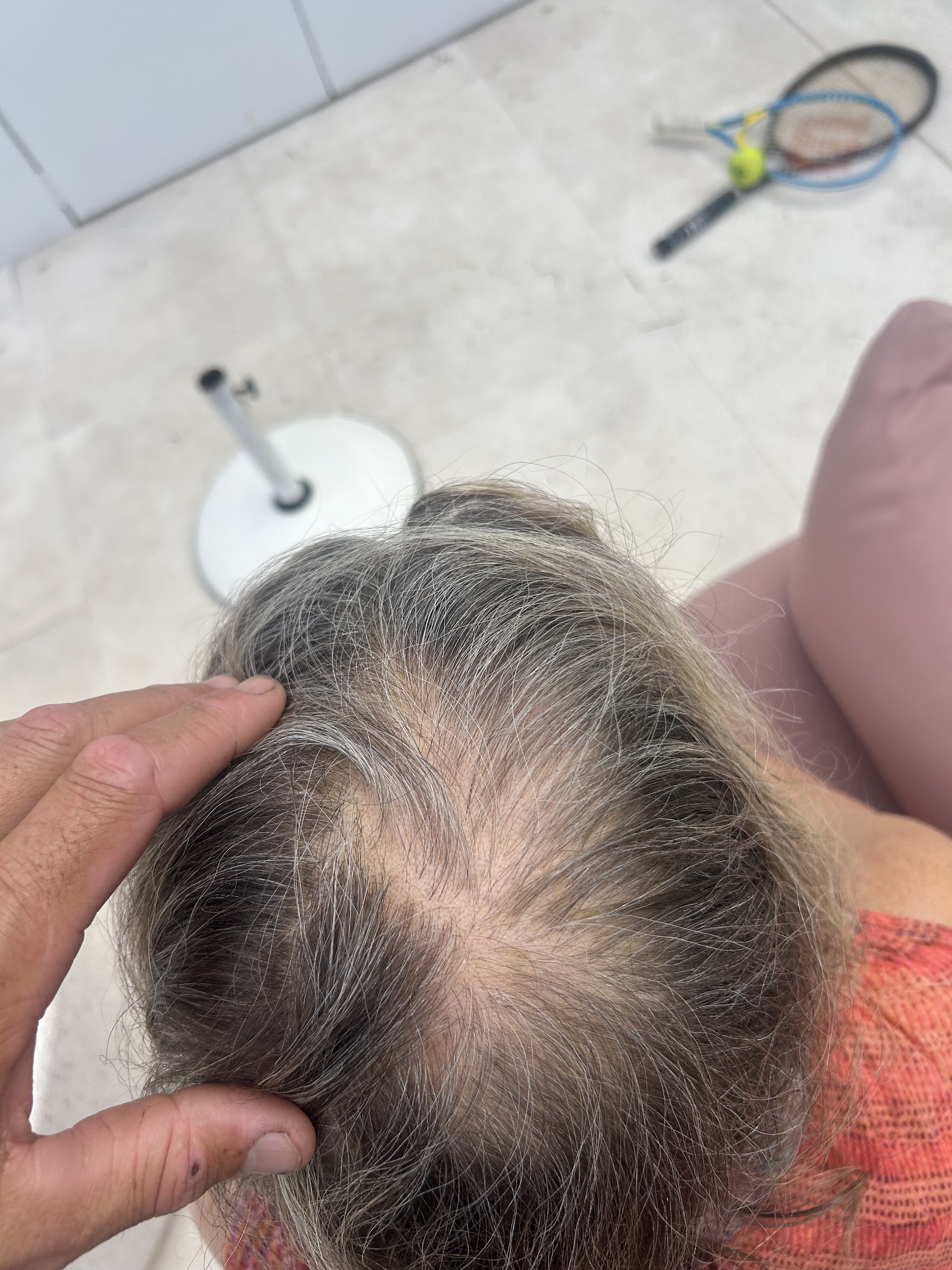
The bald patches where the cold cap didn't quite make contact. You learn to be strategic.
Getting Through Chemo - and What Came Next
Throughout chemotherapy, I told myself every single day that I was not going to get sick. Whenever people asked how I was feeling, I answered honestly - but positively. "I'm actually doing really well." As it turns out, that mindset became incredibly powerful. Believe it or not, I never threw up once. I had a few rough days, particularly early on, but the medications my oncology team prescribed managed most of my side effects incredibly well. The ones they could not fix were the exhaustion, the forgetfulness, the emotional rollercoaster and what I can only describe as having the attention span of a goldfish. I think I handled it all remarkably well.
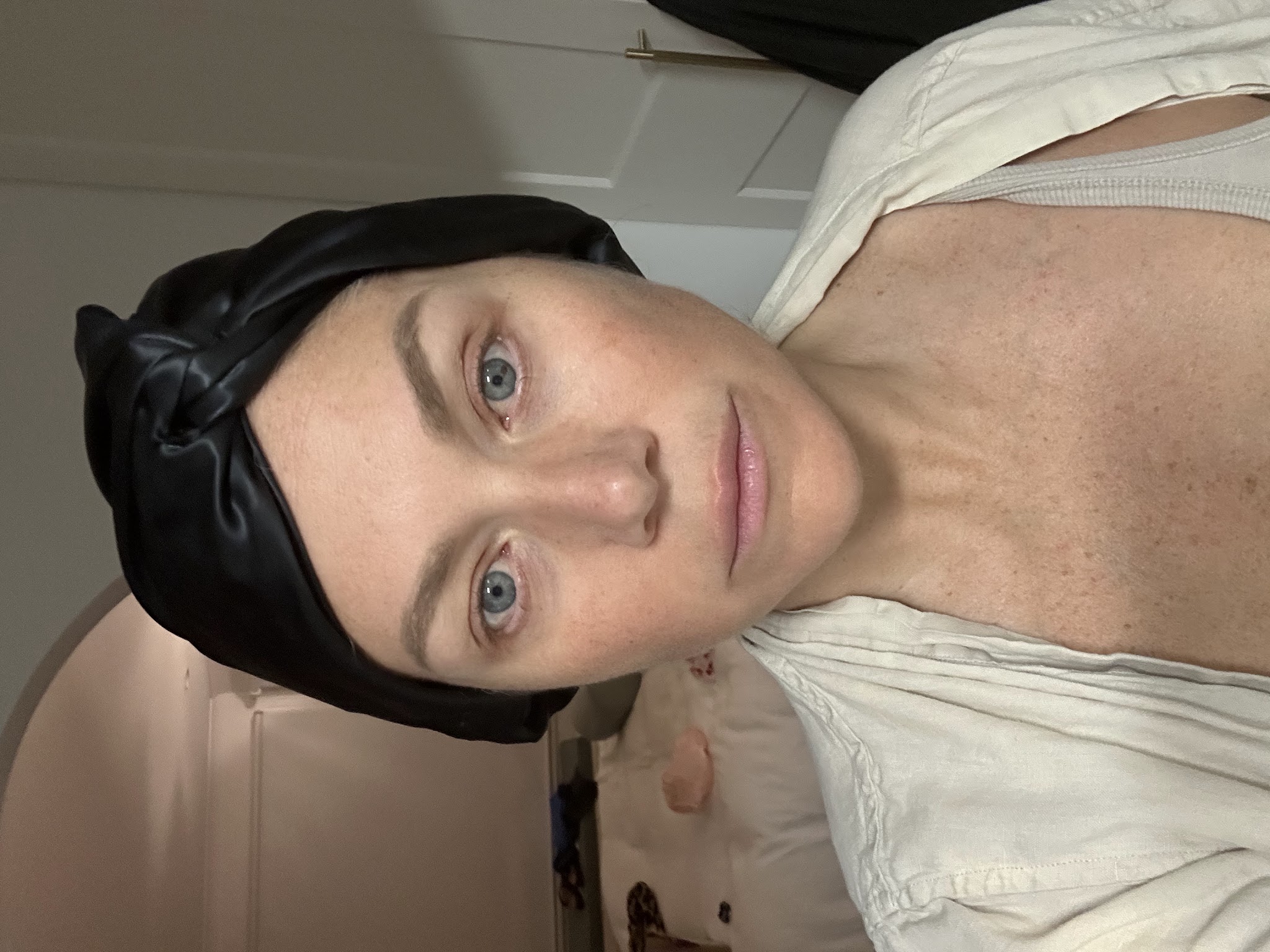
Strategic accessories became part of the daily toolkit.
The end of chemotherapy was strangely emotional. Because I moved almost immediately into radiation, there was never really that big "ring the bell" moment where I could close one chapter before beginning another. Instead, I escaped to Noosa and Byron Bay to celebrate my grandmother's 90th birthday - there was absolutely no way I was missing that - before returning home and heading straight into daily radiation at the Icon Cancer Centre in Gosford.
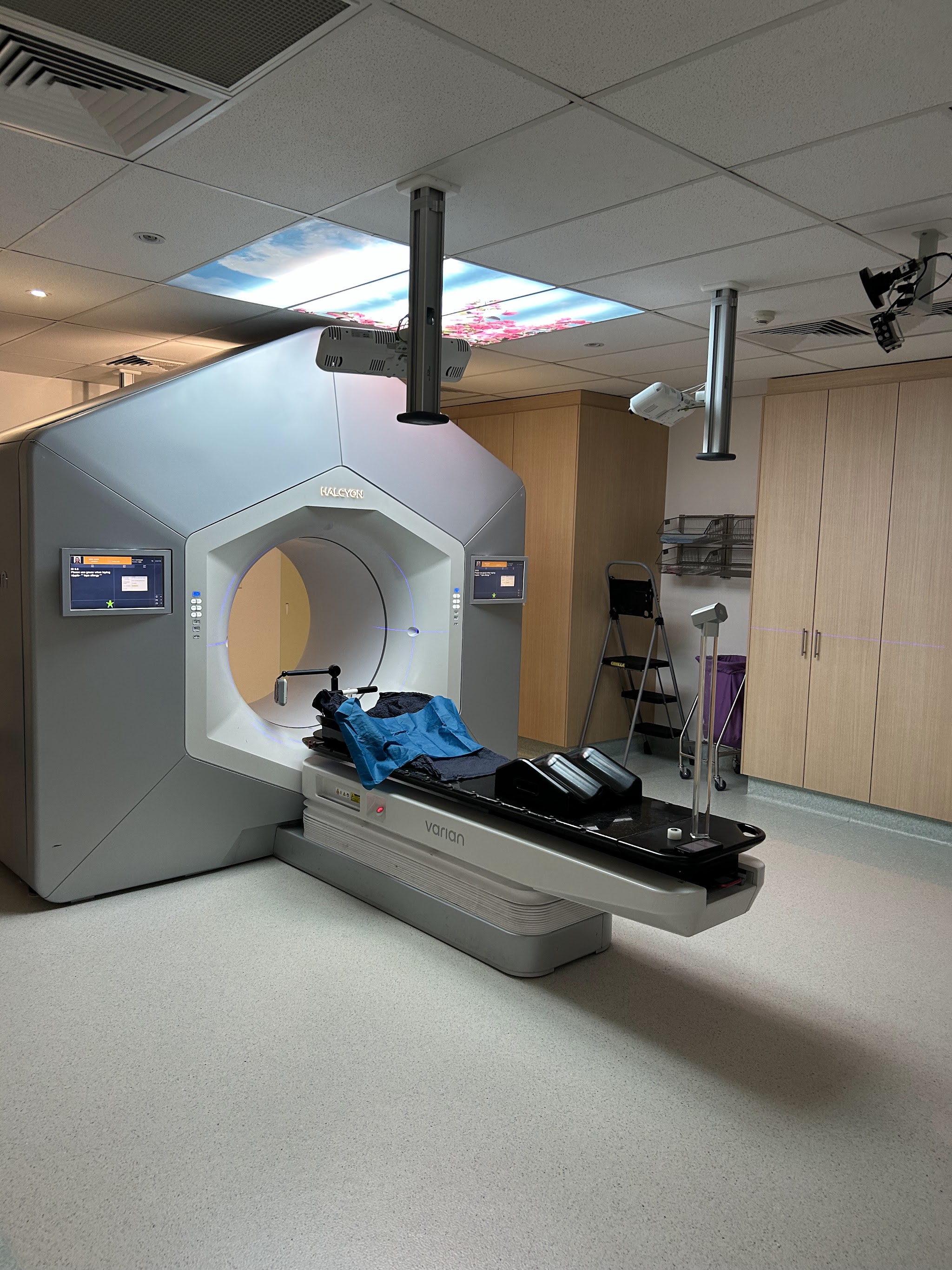
The radiation machine at Icon Cancer Centre in Gosford. The cherry blossom ceiling panel is a nice touch.
The Shift That Happened Inside
Thinking about beauty now, I realise it has very little to do with the outside. The biggest transformation has happened internally. Very early in my diagnosis I met Jade Stewart from Aurore Holistic Health. Her sessions guided me into such a deep state of relaxation that I genuinely believe they helped carry me through both surgeries. She taught me practical ways to quieten my mind, calm my nervous system and support my body's healing from the inside out.
Ed's note: On building your own healing rituals - Sigourney's Sacred Six shares the six practices that helped her heal from burnout.
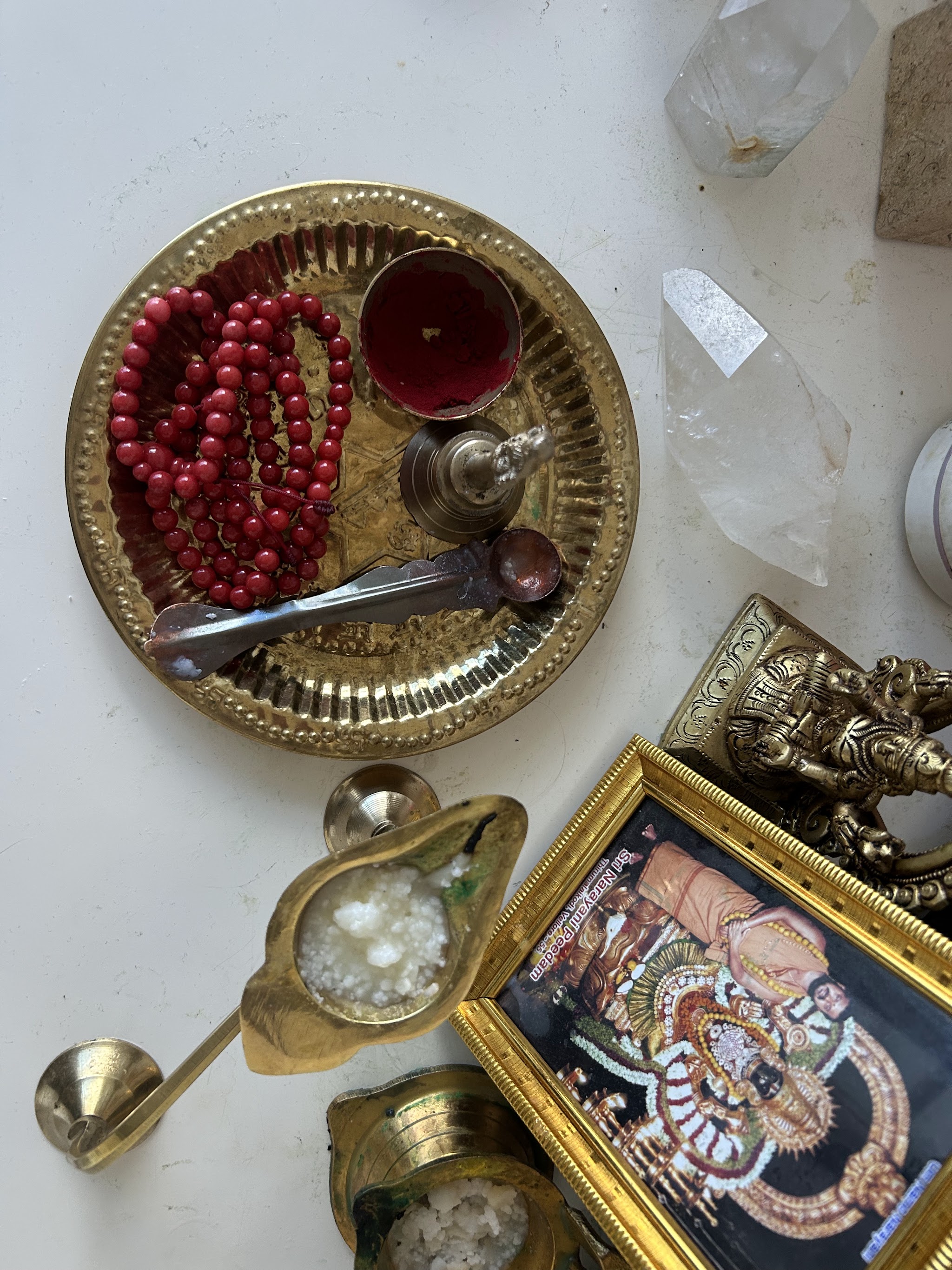
The inner work became the real work. And every now and then, the outer work gets a moment too.
The outer glow-up can wait. Although, I will admit, I am looking forward to it. I have booked in with Jessika at Headcase Paddington, who specialises in post-cancer hair transformations, and I cannot wait for my August appointment. I have started working with a nutritionist at Mungbean Health, who has me trialling a personalised wellness plan post radio, and I am booked to see Vita - otherwise known as the skin whisperer from Dolce Vita - to begin a gentle 12-week skin journey.
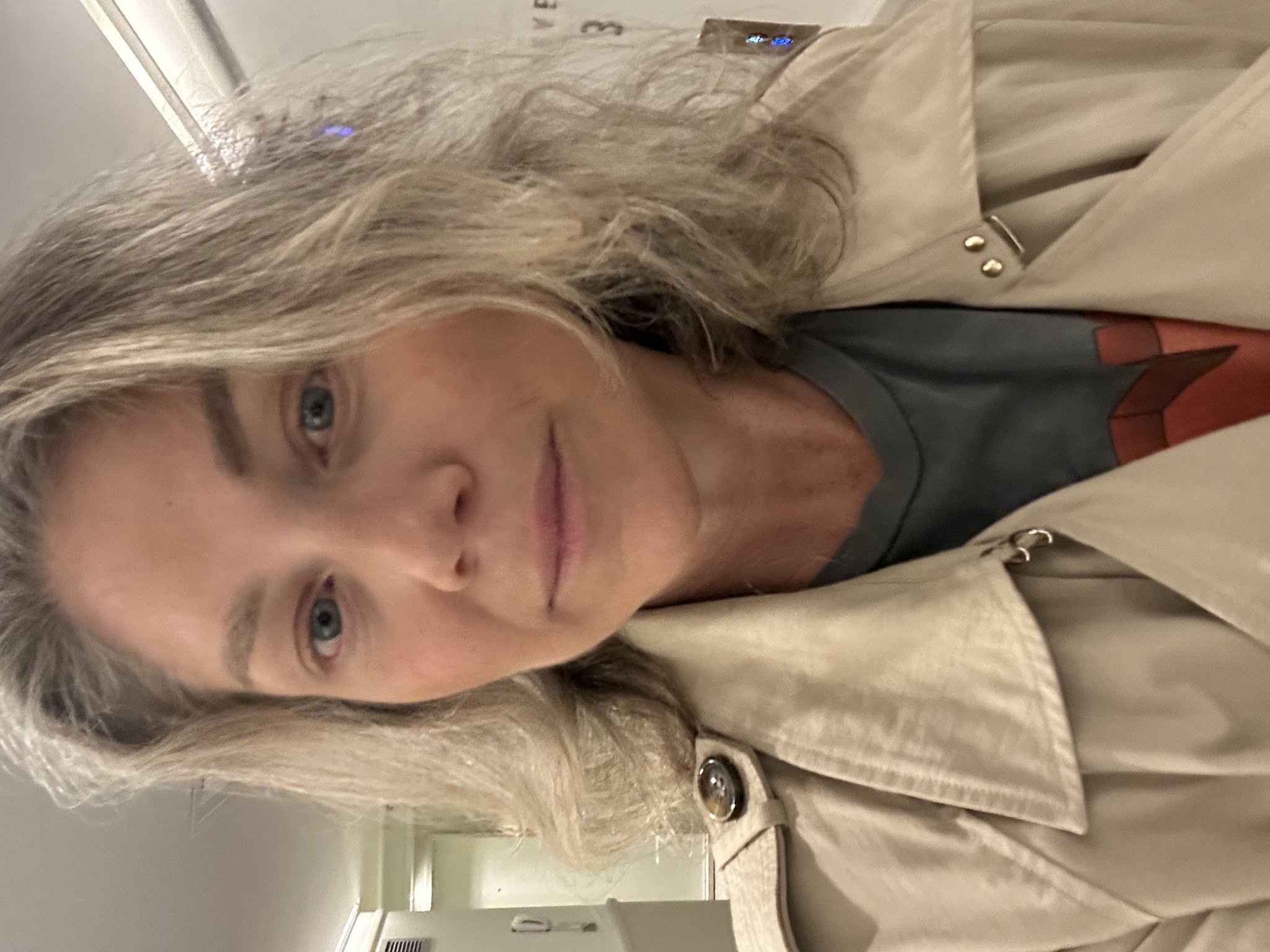
Colette 2.0 is on her way.
As I write this, I am on my final day of radiation. My skin across my chest and neck is red, sore and itchy, and the last few nights sleeping have been challenging. I am still telling myself exactly what I told myself throughout chemotherapy: "I am going to be okay." We are going to get through this together. For the first time in a long time, I feel excited about looking forward instead of looking back. I am convinced that Colette 2.0 is going to be a better version than Colette 1.0 in every way. Not because of better hair, brighter skin or fewer wrinkles. But because she has learnt that peace is far more valuable than perfection.
Peace is far more valuable than perfection.
If you or someone you love is navigating a breast cancer diagnosis, Breast Cancer Network Australia offers free support, resources and connection with others who understand.